Key points
- The coast contains diverse landforms such as headlands, beaches, lagoons, estuaries, floodplains and many unique ecosystems.
- Around 85% of the population of NSW live within 50 km of the coastline. The NSW coast provides us with environmental, social, cultural and economic benefits. The continued provision of these benefits depends on maintaining the health, resilience, and quality of coastal environments.
- The NSW coast is highly vulnerable to climate change. Many NSW coastal areas already experience some inundation during higher tides. Climate change is projected to make this inundation both more common and more prolonged, as well as increasing the extent of low-lying areas affected.
- Climate change will also increase coastal erosion and the recession of most sandy beaches (the beaches will move further inland). These changes will impact coastal ecosystems, infrastructure and industries.
- The NSW government is assisting local government and local communities to adapt to climate change in coastal areas through the Coastal Management Framework, science, research and new technologies, and community education and engagement.
The importance of the coast in NSW
The NSW coast includes over 2,000 km of coastline, which provides immense environmental, social, cultural and economic values.
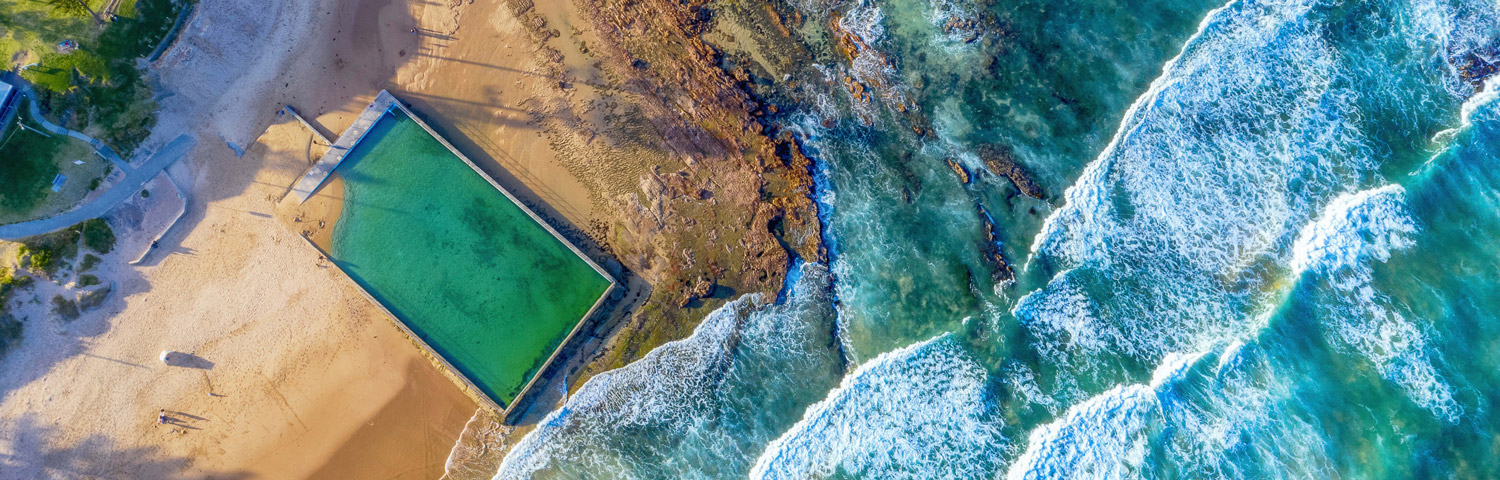
The coastline encompasses long stretches of sandy beach and dune backed by broad estuarine waterways, as well as headlands and rocky shorelines.
These landforms have been shaped by the gradual processes of waves, winds, tides, currents and former and current sea levels. They support diverse and important ecosystems including temperate reefs, sandy nearshore and beach environments, seagrasses and mangroves.
The NSW coast is important to our economy, supporting commercial uses such as fishing, aquaculture and tourism.
NSW has a large coastal fishery and aquaculture industry. These industries depend on healthy coastal ecosystems which support commercial seafood species for all or part of their life cycles.
Local Aboriginal people also regard the NSW coast as culturally significant and important. It provides important places for cultural activities such as gathering, fishing and connecting to Country and contains many sites of significant cultural value.
The NSW coast offers a range of social and recreational values by providing places for people to relax, connect with nature and each other, and enjoy activities such as fishing, walking, surfing and swimming.
Tourists from across Australia and the world are attracted to NSW’s beaches and coastal areas. Tourism was the largest contributor to NSW's ocean economy in 2021–22, when the broader NSW marine estate generated $16.2 billion.
How the coast is affected by climate change in NSW
Climate change will have a significant effect on the NSW coast in several ways. Key impacts include sea-level rise, warming ocean temperatures, ocean acidification, changes to rainfall and runoff, and more extreme weather events such as severe east coast lows.
These impacts will in turn affect coastal landforms and ecosystems including oceans, beaches, estuaries, lagoons and rivers, and their flow on effects impacting on:
- coastal development and infrastructure
- habitats and wildlife
- coastal communities
- social and cultural activities
- coastal industries such as fishing, agriculture and tourism.
Sea-level rise
Sea-level rise affects coasts by increasing inundation and erosion, altering sediment movement along beaches, and changing the salinity of estuaries, lagoons, tidal rivers and coastal lakes.
Future sea-level rise will exacerbate other impacts of climate change, such as more extreme weather events. For example, increased ocean water levels during storms are almost certain to result in more frequent coastal inundation, higher water levels in lakes and estuaries and more flooding in coastal rivers. Estuaries and nearby low-lying areas will experience more extensive and more frequent inundation, with some areas expected to become permanently inundated with increasing sea levels. Water levels throughout our coastal rivers and estuaries will also increase, including in some rivers that extend inland far from the ocean. This will exacerbate riverine flooding, which is already a major problem in NSW.
Many developments along the NSW coast are at risk from inundation and erosion as a result of sea-level rise. In relation to inundation specifically, there are currently around 3,345 buildings exposed to estuarine inundation at a 1 day per year (exceedance) frequency. By 2100, under the same inundation frequency, exposure is projected to increase to between 50,700 and 86,700 under low (SSP1-2.6) and high (SSP3-7.0) emission scenarios, respectively.
The highest exposure occurs in our estuaries and their surrounding floodplains, where considerable urban development has occurred on low-lying floodplain and reclaimed land. In some of these areas, tidal inundation is already occurring more frequently than the last few decades. Elsewhere, previous rates of drainage are no longer achieved.
Rising sea levels, saltwater intrusion and coastal erosion will also pose ongoing threats to coastal ecosystems. Many coastal areas are important habitats for species that only occur in those ecosystems and provide nursery grounds for the juveniles of many marine and land species. Degradation or loss of these habitats will therefore have major effects on our environment and on industries that rely on it, such as fisheries and tourism
Changes to rainfall, runoff and extreme weather events
Climate change is affecting how often rainfall and storm events occur and how intense they are.
Extreme weather events are likely to become more frequent and more severe. In terms of east coast lows, which are the main cause of major erosion and flooding along the NSW coast, climate change projections show more extreme lows in the warmer months and fewer small to moderate lows in the cooler months.
When combined with sea-level rise, these changes are likely to cause more frequent and severe flooding. Low-lying coastal areas are most at risk, including infrastructure, houses and developments along coasts, rivers and estuaries.
Climate change projections also show tropical cyclones are likely to occur further south. This will increase the risk of significant impact on the northern NSW coast, with cyclones leading to increased erosion, coastal flooding and more risk of storm surges.
Adapting to changes on the coast in NSW
The most effective way to limit the further impacts of climate change is to reduce carbon dioxide emissions. At the same time, local adaptation actions are needed to respond to the impacts that are already occurring and are likely to occur in future.
To help coastal managers consider climate change in their work, adaptation guidance is available on the climate-adapted coastal management page.
The NSW Government is taking action on climate change through multiple pathways, including the Climate Change (Net Zero Future) Act 2023, the NSW Climate Change Adaptation Strategy and the NSW Climate Change Adaptation Action Plan 2025–2029.
Related information
- Coasts – NSW Government
- Coastal management toolkit – NSW Government
- OzCoasts and OzEstuaries – Geoscience Australia
- Welcome to Sea Country – NSW Department of Primary Industries and Regional Development
- SEED database – NSW Government
Case studies

What if the future begins with a new word? The Symbiocene offers a practical philosophy for designing relationships where people and nature thrive together.

On the New South Wales South Coast, a project bringing Aboriginal cultural custodians into the bushfire emergency control room is reshaping how decisions are made under pressure.

The Yass Area Network of Landcare Groups is is using the Restore and Renew webtool to guide seed selection for their Climate Ready Revegetation Project.